

- Beitou Hot Springs
- Hot Spring Museum
Hours verified August 2026
Beitou Hot Spring Museum, the free 1913 bathhouse
A Tudor-fronted brick building six minutes uphill from the station, holding the bathhouse the Japanese colonial government put here in 1913. It costs nothing, it takes forty minutes, and it is the one place that explains why this valley looks the way it does.
The short answer
Free, Tuesday to Sunday 10:00–18:00, last admission 17:45, closed Mondays. Shoes off at the door. Allow forty minutes. You cannot bathe here — the great pool has been dry since it became a museum.
The visit · 01 — free, but not on a Monday
Hours, admission and the shoes rule
Two things catch people out here: it is shut on Mondays, and you take your shoes off at the entrance. Neither is obvious from the street.
| What | Answer | The part people get wrong |
|---|---|---|
| AdmissionTaipei Department of Cultural Affairs | NT$0free, no ticket | No booking, no ticket desk. Walk in and sign the visitor book if asked. |
| HoursTuesday to Sunday | 10:00–18:00 | Last admission is 17:45. Turning up at 17:50 means looking at the door. |
| ClosedEvery week | Mondays | Thermal Valley is shut on Mondays too. A Monday in Beitou loses both free sights. |
| ShoesAt the entrance | Off, always | It is a wooden building with tatami upstairs. Wear socks you are happy to be seen in. |
| Time neededBoth floors | 40 min | Twenty if you only want the bath hall. An hour if you read the panels properly. |
| Walk from XinbeitouThrough Beitou Park | 6 min | Gentle uphill, signposted. Thermal Valley is four minutes further up the same path. |
| BathingIn the museum | Not possible | The great pool is drained and has been since 1998. This is a building to look at, not to use. |
Admission and hours from the Taipei Department of Cultural Affairs listing, cross-checked against the city tourism attraction page, both read August 2026. Address: No. 2, Zhongshan Road, Beitou District.
The building · 02 — what you are actually standing in
A colonial bathhouse built to out-do the ones back home
In 1913 the Taihokuchō government — the Japanese colonial administration of northern Taiwan — put up a public bathhouse in Beitou Park. It was not a modest municipal facility. The ground floor held a large communal pool ringed by an arched colonnade, lit through stained glass, with separate changing rooms for men and women and a private bath reserved for distinguished guests. Upstairs was a tatami hall for resting after the water.
The style is the giveaway: brick and timber with a black tile roof, Tudor at the front and Roman at the pool. It is what happens when an empire builds a Japanese bathing culture inside a European architectural fashion, in a Taiwanese volcanic valley, and does not think any of that is strange.
Then it was nearly demolished
The bathhouse closed after the war and the building slid into disrepair for decades. What saved it was not the city — it was local preservationists, including a schoolteacher and her pupils, who found it derelict and campaigned to keep it standing. It reopened as a museum in 1998 and is now a designated historic site.
That is worth knowing while you are inside. Nearly every other bathhouse of its generation in Beitou is gone. This one exists because a group of people who had no authority decided it should.
What to look for
- The great bath hall — the colonnade and the arched windows are original. It is dry now, which makes the scale obvious in a way it would not be full.
- The stained glass — best in the late afternoon when the light comes through it at an angle.
- The tatami hall upstairs — the resting room, and the reason for the shoes rule.
- The hokutolite display — specimens of the radium-bearing mineral that forms in this valley and in exactly one other place on Earth.
THE BUILDING, IN DATES
1913 — built as a public bathhouse by the Taihokuchō government.
Post-war — closed, repurposed, then abandoned. Decades of disrepair.
1990s — local residents and schoolchildren campaign against demolition.
1998 — reopens as the Beitou Hot Spring Museum. Free, and still free.

The order · 03 — how it fits the rest of the hill
The museum is the middle stop, not the destination
Three free things sit on one uphill line from the station. Doing them in the wrong order means walking the hill twice, and doing them on a Monday means two of the three are locked.
From Xinbeitou station the path runs up through Beitou Park. You pass the free public foot baths at about four minutes, the museum at six, and Thermal Valley at ten. Everything is signposted and the climb is gentle the whole way.
The sensible sequence is up then down: foot baths, museum, valley, then back down the hill to a bath. That way the hot part of the day is spent walking downhill towards water, and you are not doubling back.
Budget for the whole free stretch: nothing. All three cost NT$80 of metro fare and your morning.
If you have a half day rather than a full one, the museum is the first thing to cut — not because it is poor, but because forty minutes of reading is the most compressible item on the list, and the valley and the water are not.
ONE LINE, UPHILL
- 0 minXinbeitoustation exit
- +4Foot bathsfree, open daily
- +6Museumfree, closed Mon
- +10Thermal Valleyfree, closed Mon
- +40downhill to a bath
Against our own interest — a free forty minutes we make nothing from
Who should skip the museum
We earn nothing here and there is nothing to book. For anyone with a passing interest in how this valley became a hot spring town, it is the best free forty minutes in Beitou — and we would rather tell you that than steer you past it towards something we get paid for.
Questions · 05
Beitou Hot Spring Museum, answered
Is Beitou Hot Spring Museum free?
Yes. Admission is free and there is no ticket or booking. It is open Tuesday to Sunday, 10:00 to 18:00, with last admission at 17:45, and closed on Mondays.
What are the Beitou Hot Spring Museum opening hours?
Tuesday to Sunday, 10:00–18:00. Last admission 17:45. Closed Mondays. Confirmed with the Taipei Department of Cultural Affairs and the city tourism listing in August 2026.
Can you bathe at the Beitou Hot Spring Museum?
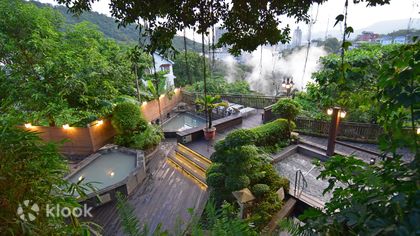
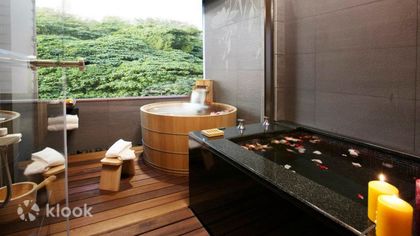
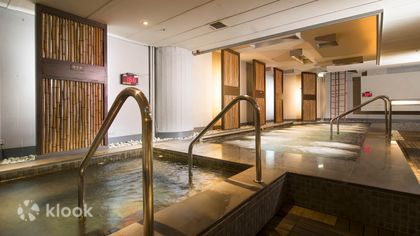
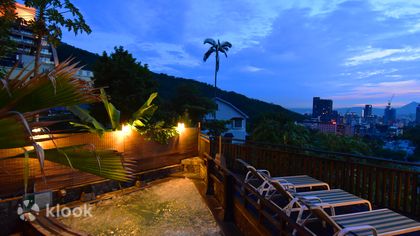
No. The great bath has been drained since the building became a museum in 1998. For a working bathhouse of the same kind, Nan Fung is three minutes from the station at $21.39, and Longnice — open since 1907 — is NT$150 at the door.
Do you have to take your shoes off?
Yes, at the entrance, every visitor. The building is timber with a tatami hall upstairs. Wear socks.
How long does the Beitou Hot Spring Museum take?
About forty minutes for both floors at a normal pace. Twenty if you only want to see the bath hall, an hour if you read the exhibition panels.
When was the Beitou Hot Spring Museum built?
1913, as a public bathhouse built by the Taihokuchō government during the Japanese colonial period. It closed after the war, fell derelict, and was saved from demolition by local residents before reopening as a museum in 1998.
What is inside the museum?
The original great bath hall with its arched colonnade and stained glass, the tatami resting hall upstairs, exhibits on Beitou's bathing culture, and specimens of hokutolite — the radium-bearing mineral that forms only in this valley and at Tamagawa in Japan.
Is the museum worth visiting?
If you have any interest in why Beitou became a hot spring town, yes — it is free and it is the only building left that answers the question. Skip it if you have one afternoon and came to bathe, or if you do not read museum panels.
Next · 06
The rest of the survey


Verified August 2026 · The museum is free and earns us nothing. We earn a commission only on the bath you book afterwards, at no cost to you.